The Many Hats of Indie Development
Overthrone was a tactical, coop roguelike developed by Limber Games, a small studio I co-founded. Development started in 2021, and the project was suspended in 2023. Every team member on a small team has to fill many roles, and my responsibilities on the project were myriad:
- Game Design, including
- Brainstorming, Prototyping, and Documentation
- Processing playtest feedback
- Level design
- Ability & gameplay design
- Enemy & encounter design
- Creating an animation pipeline that allowed for complex sequencing of animations, and precise integration of a number of assets, including VFX, particles, and IK/physics systems.
- Providing animations and VFX by editing, splicing, and remixing extant animations, or creating them from scratch.
- Creating a level decoration pipeline that streamlined terrain painting and decoration for our artists.
- Building a enemy AI framework that allowed for rapid construction and testing of enemy designs.
- Implementing art, including character models, environment models, and color palettes.
Not everything lends itself well to documentation, but I have examples of the many kinds of work I did below.
Prototyping
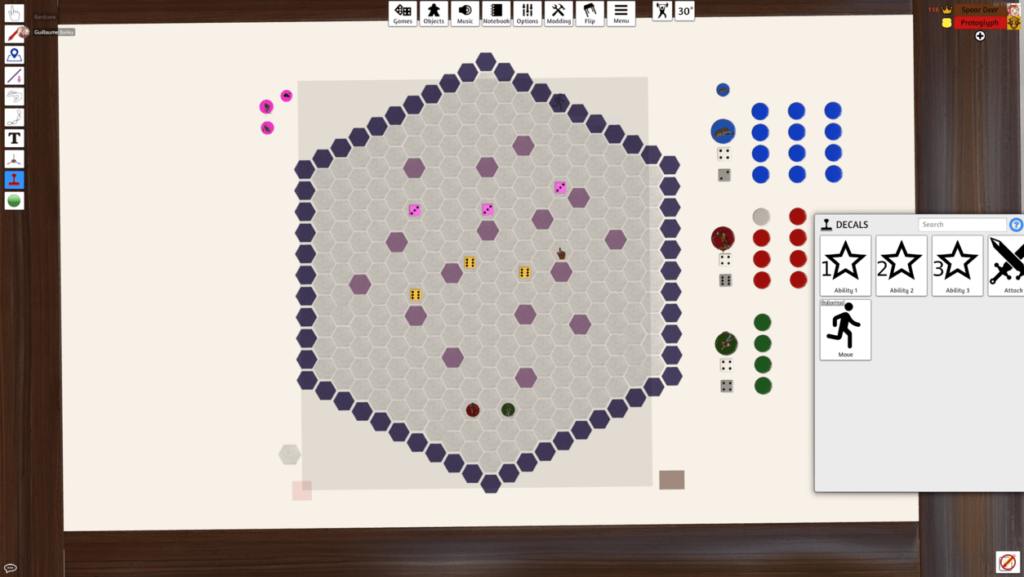
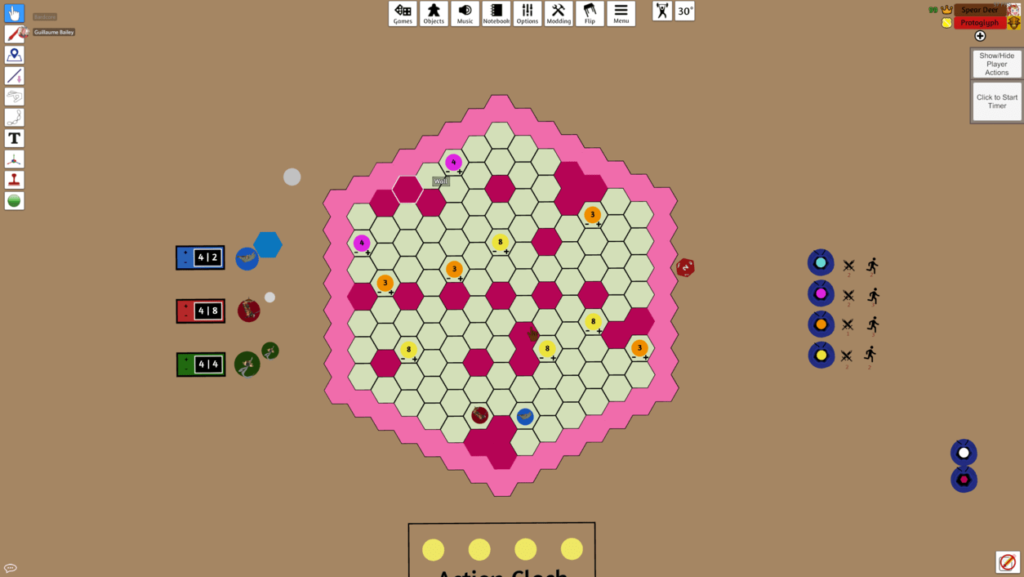
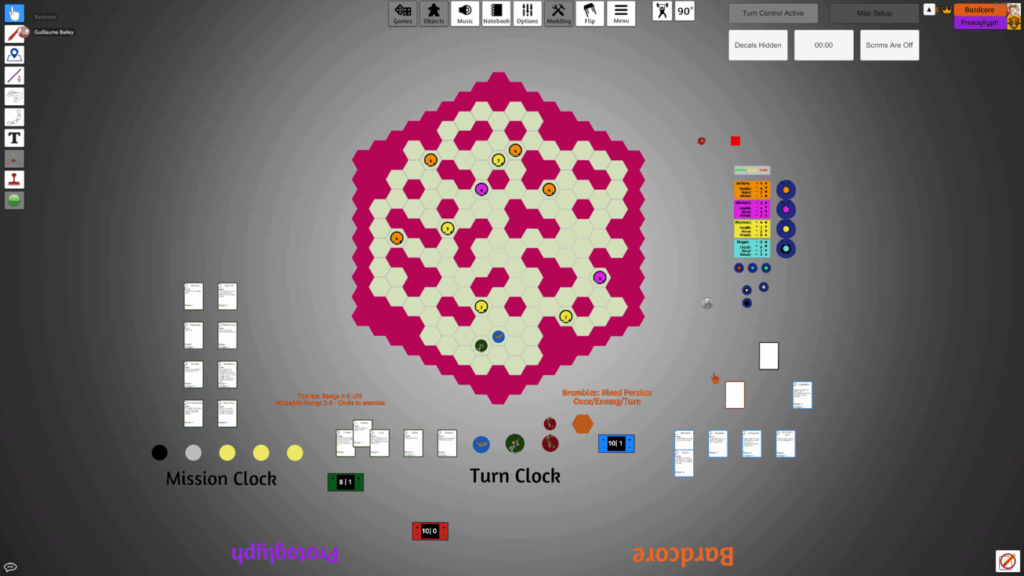
Work on Overthrone started many months before Unity was ever launched, and the earliest versions existed entirely inside Table Top Simulator. Extensive Lua scripting and some imagination let us start testing, playtesting, and iterating the game's core mechanics early and quickly.
Ideation, Design, and Documentation
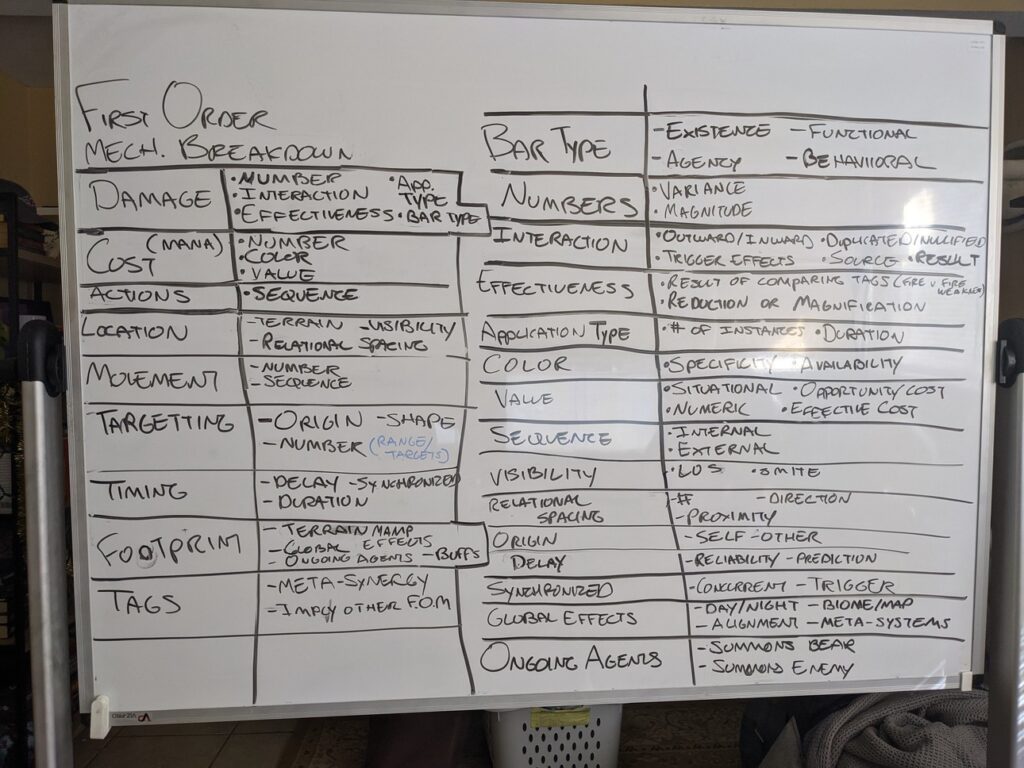
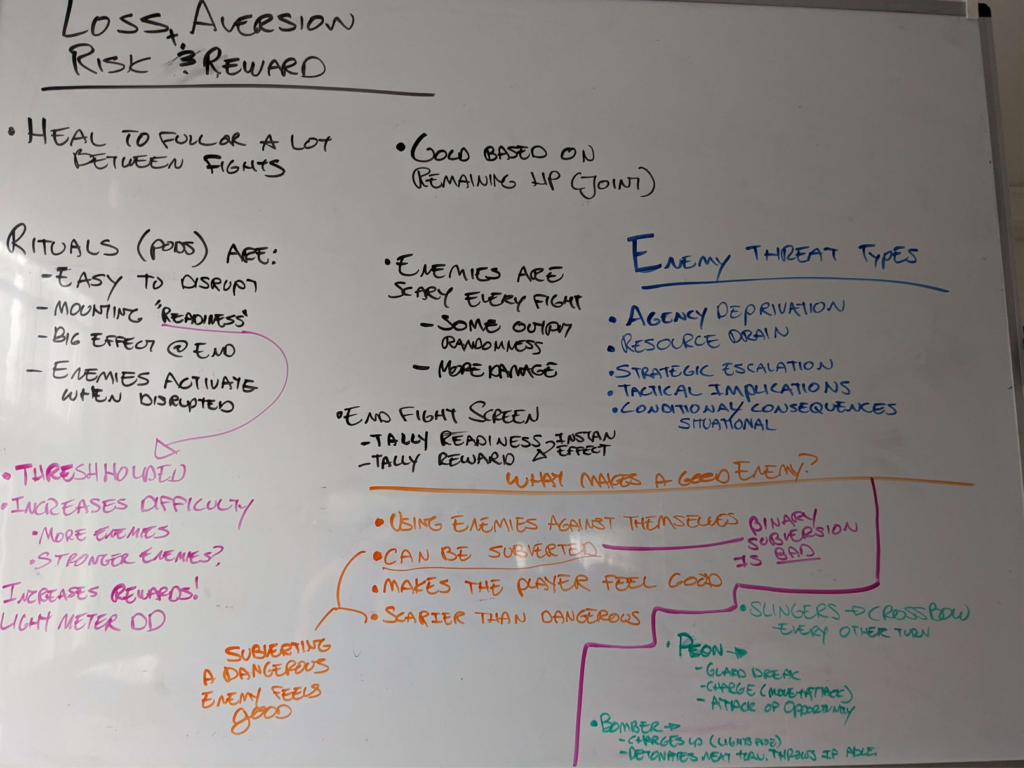
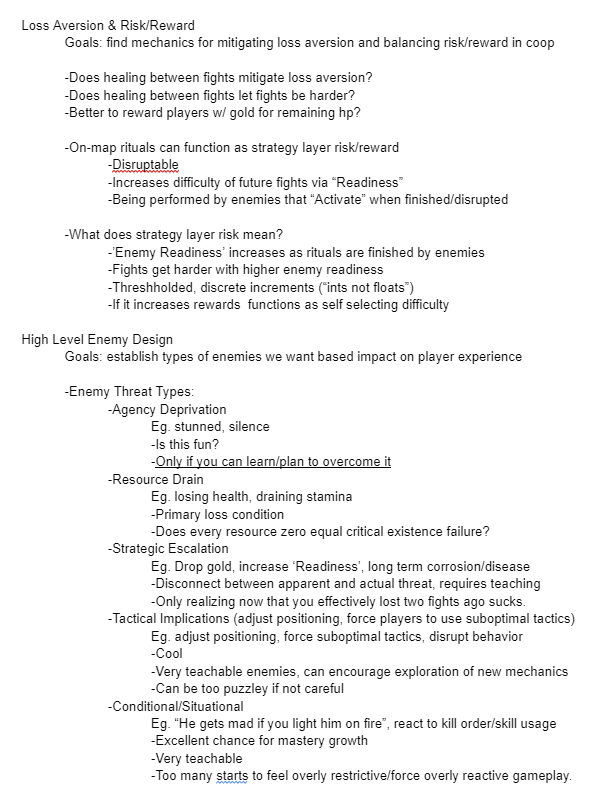
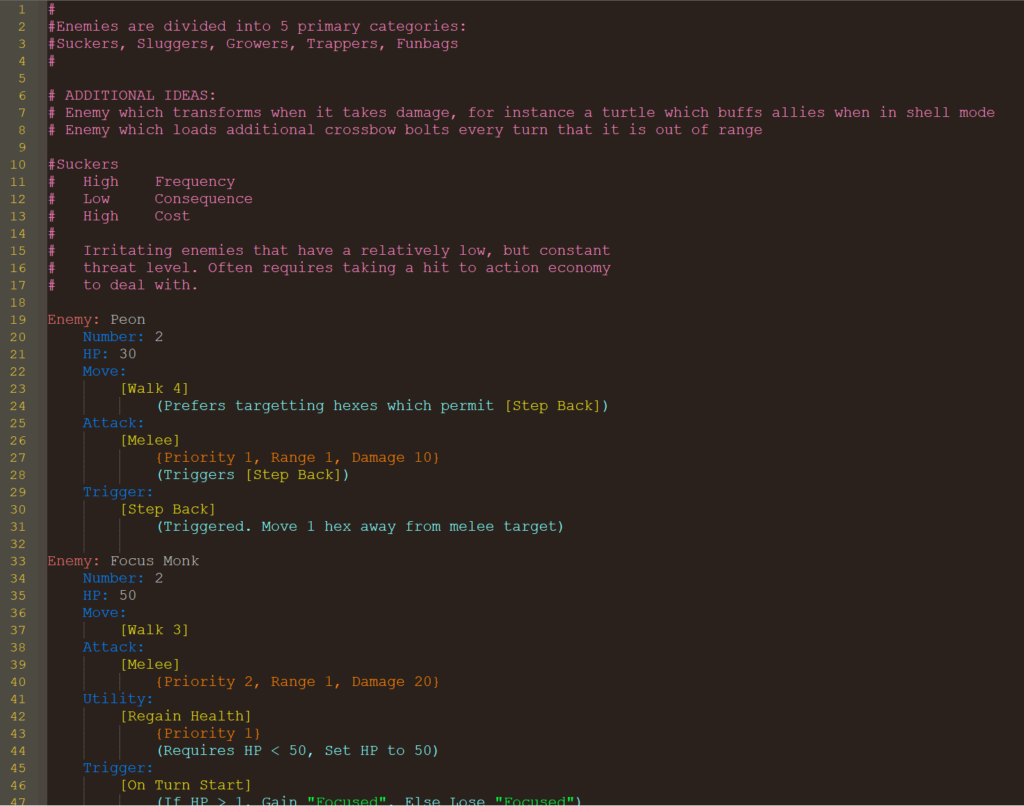
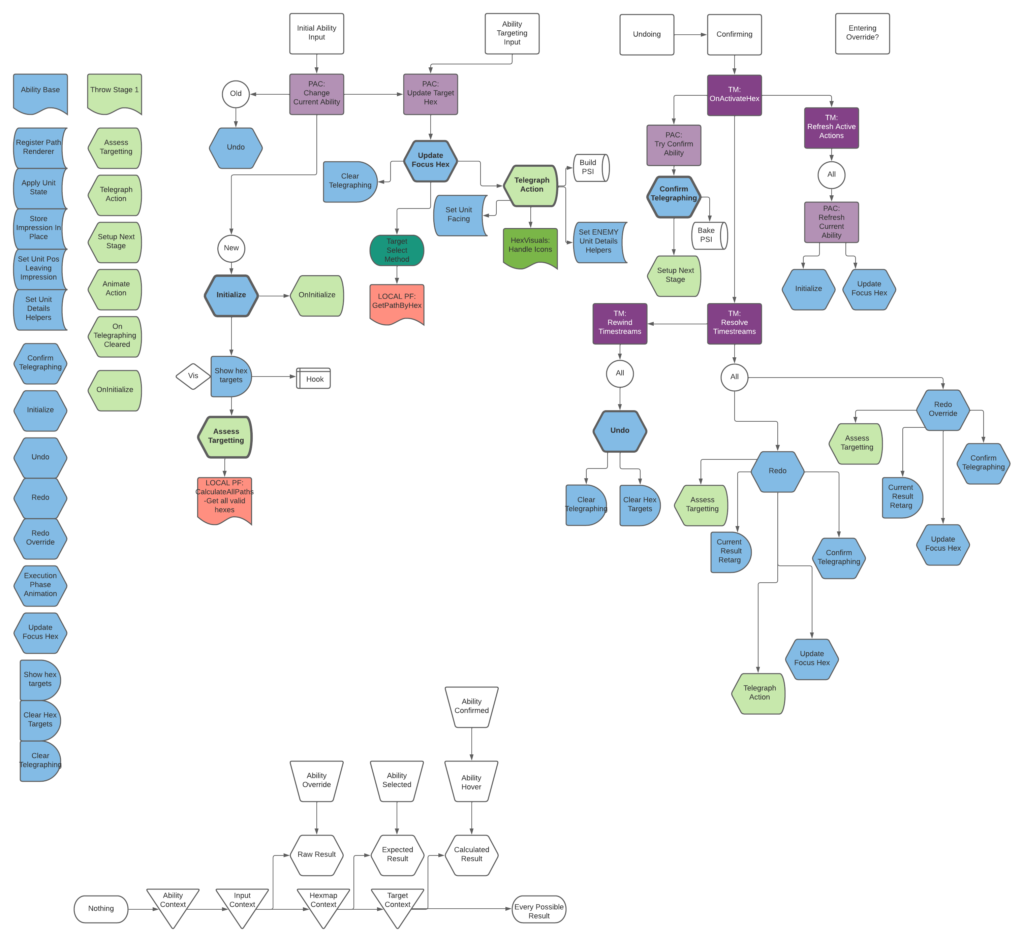
I was responsible for many different types of design on Overthrone, but almost all of it started on a white board or in a notebook. Sometimes a scan, photo, or recording will suffice, but most raw design needs to be processed into something readable and shareable to be leveraged well by a team. That means transcribing notes, generating charts, or even sometimes creating custom color coding & syntax for your favorite note taking tool.
Animation
I was responsible for finding and implementing all animations and visual effects in the game, and while we primarily used asset pack animations none of them were able to be implemented without extensive editing. My initial solution was to create a pipeline that allowed me mix, blend, and sequence existing assets into new, unique animations, but it didn't take long before asset pack animations simply became a starting point, and I was creating entirely new animations using a variety of in-engine animations editors.